



Table of Contents
3 ways to remove hard water stains from different surfaces!
Date: 12/12/2025
Hard water stain removal: What is hard water and why does it stain?
Hard water has a high mineral content. Although it is safe to drink it can make a mess of places that are prone to staining. Hard water can be bad for your plumbing and can cause erosion. The National Ground Water Association recommends that people have their well tested every year by a certified / licensed contractor yearly to make sure the water is safe.
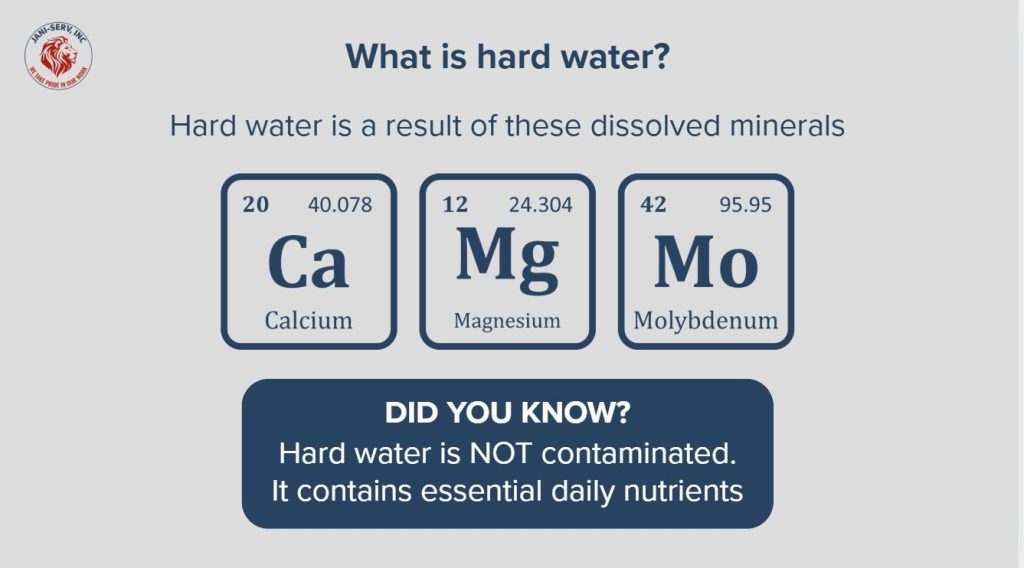
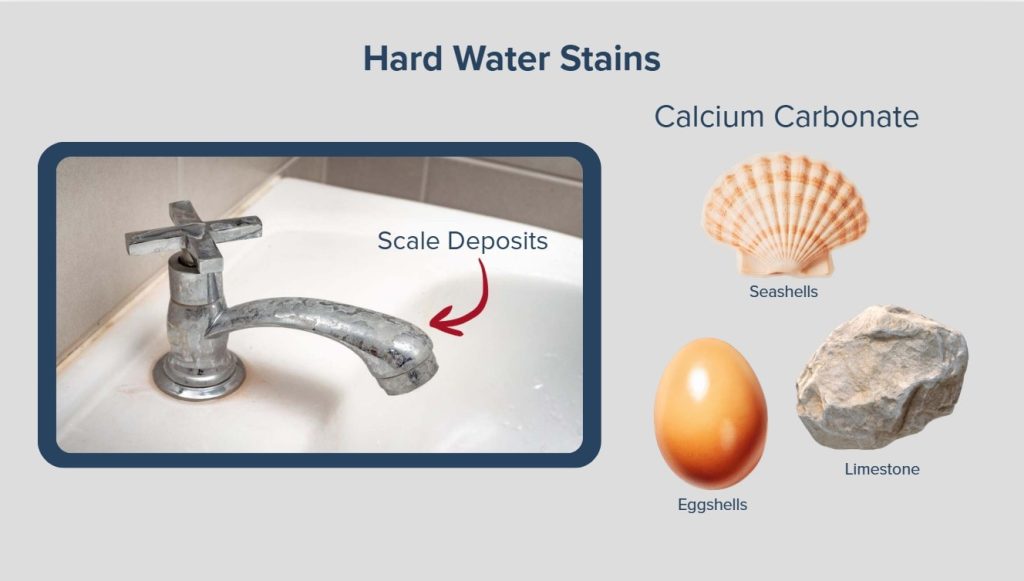
Hard water is made up of Calcium, Magnesium, and Manganese. The stains from these minerals are called scale deposits and are a helpful indicator that you may have hard water. Hard water stains form when hard water evaporates, leaving behind deposits of minerals like calcium and magnesium. The term hardness comes from the fact that hard water neutralizes the efficiency of soap, the University of Florida explains that hard water is reported based on the concentration of calcium carbonate in the water. This calcium can be easily broken down with acetic acids.
The staining from hard water that you see is from a buildup of minerals on the surface, it sticks to metal, glass, or porcelain (the most common surfaces for water use) and can be tricky to clean. Hard water can cause stains on various surfaces in the home, including sinks, faucets, chrome fixtures, and glass shower doors. The minerals in hard water can accumulate and form limescale, which consists of calcium deposits and lime, and can be difficult to remove if left unchecked. These stains appear as white or brownish spots on fixtures, glass, and tile.
What is hard water?
Hard water is water that contains a high concentration of dissolved minerals, mainly calcium and magnesium. As water travels through soil and rock, it picks up these minerals from sources like limestone, chalk, and gypsum, which then enter the water supply. Unlike soft water—such as rainwater, which contains little to no minerals—hard water is common in many regions and is especially noticeable in areas with significant mineral deposits underground.
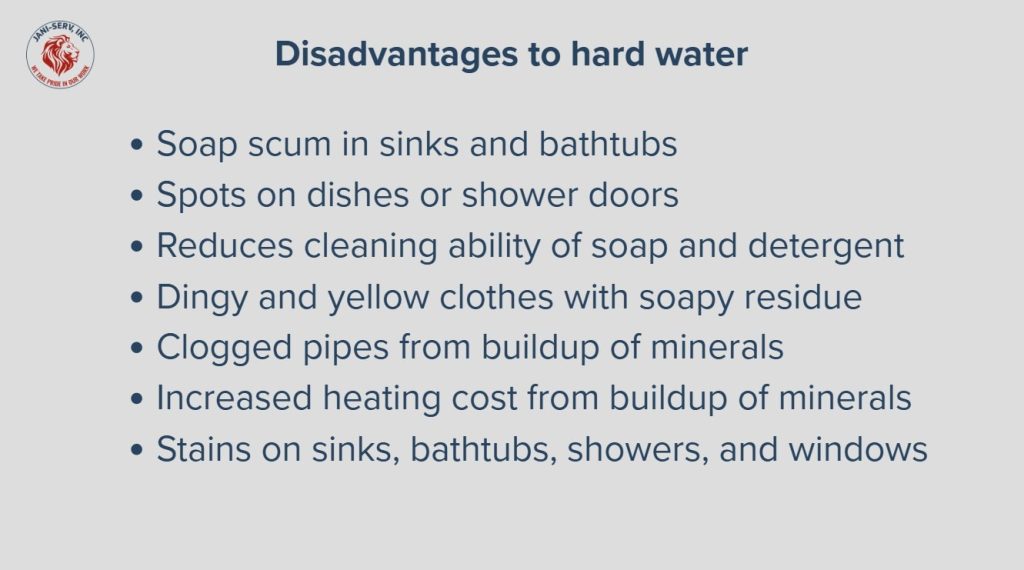
The effects of hard water are easy to spot around your facility. You might notice cloudy spots or streaks on glass shower doors, stubborn stains on sinks, or a chalky buildup around toilet bowls and faucets. These are all signs of limescale, a residue left behind by the minerals in hard water. Over time, these minerals can accumulate on glass, shower doors, and other surfaces, making cleaning more challenging and leaving unsightly water stains. While hard water is safe to use, its mineral content can create ongoing maintenance issues for commercial properties.
Why does hard water stain? (Causes of hard water stains)
Hard water stains form when water containing high levels of calcium and magnesium evaporates, leaving behind mineral deposits on surfaces. These deposits can quickly build up on glass shower doors, shower walls, and other bathroom surfaces, creating cloudy spots and streaks that are tough to remove. The problem is often made worse by soap scum, which combines with the minerals to form even more stubborn stains.
Limescale, a hard, chalky substance, can also develop inside pipes, boilers, and on fixtures, leading to reduced efficiency and potential maintenance headaches. To effectively remove hard water stains, it’s important to use cleaning solutions that can break down these mineral deposits. Common methods include applying a paste of baking soda and vinegar or using products with citric acid, which help dissolve the calcium and magnesium buildup. Without regular cleaning, these mineral deposits can accumulate, making stains more difficult to remove and leaving your glass, shower doors, and bathroom surfaces looking dull and dirty.
How hard water stain removal works
Although most of us can say chemistry isn’t a well-loved subject for the masses, the breakdown of hard water stains on surfaces is quite simple when you understand how the chemicals respond to each other.
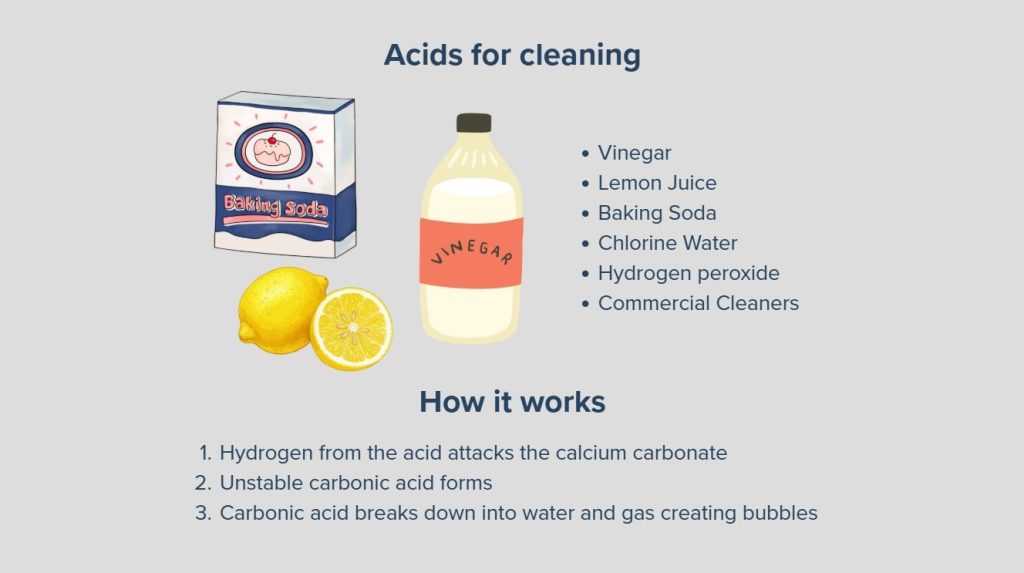
Minerals can be broken down with acids, and the minerals from hard water stains have specific acids that can be used. The most effective cleaners for hard water stains are acidic solutions such as white vinegar or lemon juice, which help clean hard water stains by dissolving mineral deposits. The hydrogen attacks the calcium and creates an unstable carbonic acid which quickly breaks down into water and gas, creating bubbles (fizzing). For stubborn stains, a strong commercial product may be necessary to clean hard water stains, especially when regular acidic solutions are not enough. To effectively remove water stains, it is often necessary to scrub the affected area with a brush or non-abrasive pad after applying the cleaning solution.
You can read this helpful article on how water softeners work, to learn more about the process. Let’s talk about where it affects people the most and how to combat it. In areas like toilets and sinks, using a mixture of vinegar and baking soda can effectively clean hard water stains, especially when combined with a thorough scrub to remove mineral buildup.
Hard water in Utah: Hard water ratings by city
Hard water affects more than 85% of the country according to the Water Quality Association. Stains and hard water effects can last a long time, especially if you don’t know how to manage a water softener or don’t have proper cleaning materials.
Make sure to fill your water softener if stains or buildup in plumbing is a concern.
Utah is heavily affected by hard water and most residents have issues with hard water stains. Check out this helpful table showing the hard water rating by zip code for Utah residents.
Hard water stain removal: Removing hard water stains from metal
For a natural or more gentle removal, you can start with a vinegar spray made with equal parts vinegar and water; letting the solution sit on the stains will give you the best results. Soaking faucets in vinegar is also an effective method for removing hard water stains. You can wrap vinegar-soaked paper towels around faucets and chrome fixtures to help dissolve mineral deposits. Another method can be to use a baking soda paste with baking soda and water to break down the calcium buildup.
If vinegar and water is not cutting it, you can start to move toward more aggressive cleaning methods. Use a brush, old toothbrush, or sponge to rub the affected areas and help lift the stains. For stubborn spots, superfine steel wool can be used, but be careful not to scratch chrome surfaces—always test a small area first and avoid abrasive tools on delicate finishes.
Hydrogen peroxide can remove hard water stains and soap scum when applied and left to sit for a while. You can also use a hydrogen peroxide paste made with baking soda and hydrogen peroxide; mix it until it looks like the texture of toothpaste, leave the solution on the surface for 15-30 min before cleaning up. Fluoride toothpaste can be used to clean hard water stains from faucets and mirrors. CLR is a common cleaning agent for hard water stains and limescale, and OxiClean offers two limescale remover options: Bathroom Cleaner and FoamTastic™. Rubbing alcohol is effective for tackling hard water stains on smooth surfaces like glass and chrome.
After scrubbing, always rinse the surface thoroughly to remove any residue and prevent buildup.
Finish with some olive oil to reshine the metal after cleaning.
Hard water stain removal: Removing hard water stains from porcelain
These surfaces need a bit of extra work as they are more likely to have soap residue as well as the calcium buildup. For best results, use a brush, old toothbrush, or sponge to scrub away hard water stains and soap scum. The Pink Stuff is a great product if you are looking for a quick removal of soap scum.
You can use the same mixtures as above to clean the hard water stains, but be sure to scrub the surface thoroughly with a brush, old toothbrush, or sponge to effectively remove mineral deposits.
Hard water stain removal: Removing hard water stains from glass
For showers, having a squeegee hanging nearby will greatly reduce the appearance of hard water stains, but it will not remove the minerals from the surface of the glass completely. Cleaning your glass surfaces and mirrors regularly will help keep the buildup to a minimum. Vertical surfaces like shower doors may require special attention, as cleaning solutions can run off before they have time to work.
Using a mixture of white vinegar and water in a spray bottle is an effective way to clean glass surfaces with hard water stains. Spray the solution generously, let it sit, and then rub the area with a microfiber cloth or superfine steel wool. Be sure to use only superfine steel wool to avoid scratching the glass, and never use it on chrome or stainless steel. For persistent stains, rub in a circular motion to help lift mineral deposits. Rubbing alcohol can also be effective for tackling hard water stains on smooth surfaces like glass and chrome. For mirrors, fluoride toothpaste can be applied and gently rubbed to remove hard water stains.
Hard water stain removal: Removing hard water stains from stone
Glass, metal and porcelain surfaces are considered a non porous or low porosity material which makes cleaning simpler. For natural stone this could prove to be tricky.
Putting equal parts vinegar and water into a steam cleaner can help remove some of the stains from more porous surfaces. Using hot water or a hot vinegar solution can further help dissolve mineral deposits on porous stone surfaces, enhancing the effectiveness of your cleaning process. Remember heavier staining will need stronger acids to break down the mineral deposits in your kitchen.
Preventing hard water stains
Preventing hard water stains is much easier than dealing with stubborn buildup after it forms. One of the most effective ways to keep your facility’s surfaces clean is to install a water softener, which removes minerals from the water supply and helps prevent limescale and mineral deposits from forming in the first place. For daily maintenance, make it a habit to wipe down glass shower doors, shower walls, and other wet surfaces with a microfiber cloth as soon as they get wet. This simple step removes water before it can evaporate and leave behind stains.
Using a spray bottle filled with a solution of half vinegar and half water is another great way to prevent hard water stains. Spray the solution onto glass doors, sinks, and other surfaces, then wipe with a clean cloth to remove any lingering minerals. Regular cleaning with baking soda and vinegar can also help keep mineral deposits and limescale at bay. By staying proactive with these methods, you can prevent hard water stains from forming on your glass, shower, toilet, and other bathroom surfaces, keeping your facility looking spotless and reducing the need for intensive cleaning later on.
Conclusion
All in all. Hard water won’t kill you. In fact it has a lot of great minerals for your body, but it can be a nuisance for people who don’t like to see stains or have trouble with their pipes.
It is important to have regular upkeep of your home and surfaces to avoid future problems.
It is important to regularly check your water softener and follow manufacturer instructions to ensure the best user experience and reduce hard water damage.
For hard water stains that seem impossible to remove you can request a free cleaning evaluation from Jani-Serv, Inc. here.