

Why a cleaning “scope of work” is needed for every commercial building
Even if you are not using a janitorial company to get your building cleaned, it is important for compliance purposes to have a cleaning scope of work available for in-house or vendor staff to understand the expectations for cleaning the space.
Cleaning Scopes of work should meet OSHA requirements and cleaning staff should be fully trained on expectations
A well‑designed scope of work typically includes:
- Room‑by‑room cleaning tasks
- Frequency of cleaning (daily, weekly, monthly, as needed)
- Photos of final cleaning expectations (optional but helpful)
- List of approved supplies, chemicals, or color‑coded systems
These scopes help staff to know what services are expected for each room or building along with expectations for frequency to ensure nothing is missed. This clarity is not just operational—it supports compliance. OSHA emphasizes the importance of documented cleaning procedures to ensure safe chemical handling, proper PPE use, and consistent sanitation practices. The CDC also recommends standardized cleaning schedules to maintain healthy indoor environments.
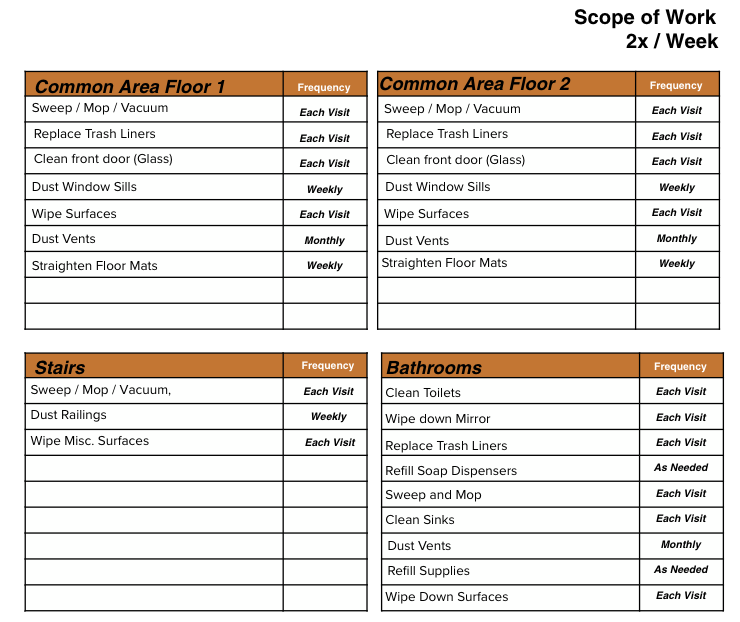
What does a scope of work look like?
A cleaning scope of work varies depending on the services, the company and the client. This is all usually customized for each business and tailored to their specific needs.
Basic tasks included on most Janitorial scopes of work include. Sweeping, Vacuuming, Wiping Surfaces, Removing Trash, etc.
These expectations are usually the bare minimum as to not overcharge for unneeded services. Services can be added based on company preference or service needs.
Why is a scope of work important?
A cleaning scope of work identifies the specific cleaning needs of each building and breaks down tasks for the cleaning staff. It ensures:
- Consistency — tasks are completed the same way every time
- Accountability — staff know what is required
- Compliance — supports OSHA, CDC, and EPA guidelines
- Quality control — supervisors can verify work against documented standards
- Transparency — clients understand exactly what they are paying for
Every cleaning scope of work should include an area, a service and the frequency the service is expected to be performed. This aligns with facility‑management best practices, which emphasize that cleaning schedules and documented procedures reduce risk, improve safety, and support regulatory compliance.
Some scopes of work are “as needed” and companies will pay cleaning staff an hourly rate rather than a service rate which sometimes does not include specific tasks, but is a list to remind the staff to check certain areas and clean them on an as needed basis.
This approach works well for:
- Storage rooms
- Mechanical rooms
- Seasonal spaces
- Low‑use conference rooms
However, high‑traffic areas—restrooms, lobbies, breakrooms—should always have defined frequencies to maintain health and safety standards.
What is the difference between a scope of work and a contract?
Cleaning Scope of Work
A scope of work should include the following information:
- Contains Services to Perform
- Frequency of service
- Area to be cleaned
- Sometimes includes chemicals and cleaning supplies expected
Cleaning Contract
A cleaning contract should include the following information:
- Pricing for each service
- Expected days per week
- Services listed with frequency
- Cancellation or continuation of service Information
- Billing Information
- Insurance
- Length of contract
- Mediation terms for issues with service
Make sure to request both a contract and a scope of work when vetting your cleaning company, this will show that they have the ability to meet expectations and complete the service at every interval.
Commercial Cleaning Companies are at the core of building maintenance and offer a huge benefit to office workers and patrons, giving everyone a cleaner and healthier environment for working and patronizing a business.
Cleaning Protocals and standards should be consistently met in order to maintain safety and compliance in the workplace. This can help to avoid disease, reduce spread of illness and improve workplace morale.