Veterinary Clinic Cleaning in Salt Lake City and Utah
Veterinary clinic cleaning that deals with odor, hair and kennel areas, for owners and managers of clinics and animal hospitals across the Wasatch Front, Rexburg and Idaho Falls.
Why a Vet Clinic Needs Its Own Cleaning Plan
Veterinary clinic cleaning needs a plan built for hair, odor and germs that animals carry, not just dust and trash. Jani-Serv, Inc. cleans veterinary clinics with a plan written around your exam rooms, treatment areas and kennels, and around the infection-control protocol your practice already follows.
Read moreShow less
Clients notice a clinic's smell as soon as they walk in, and hair collects in corners, seams and vents. The Merck Veterinary Manual describes cleaning in animal facilities as the physical removal of fur, urine, feces and dirt, and warns that a surface can look clean and still carry germs. Disinfecting comes after that, and only works when the product stays on long enough.
That is the order our crews follow every night: remove the soil, then disinfect, with products that are safe around pets. Your team keeps the animals and the clinical work; we take care of the building around them.
What It Includes
Every room in a clinic gets dirty in its own way. These are the areas a veterinary plan usually covers.
Lobby and Reception
Floors, seating, the front counter and door glass at nose height, cleaned each night so the first client of the morning walks into a fresh room.
Exam Rooms
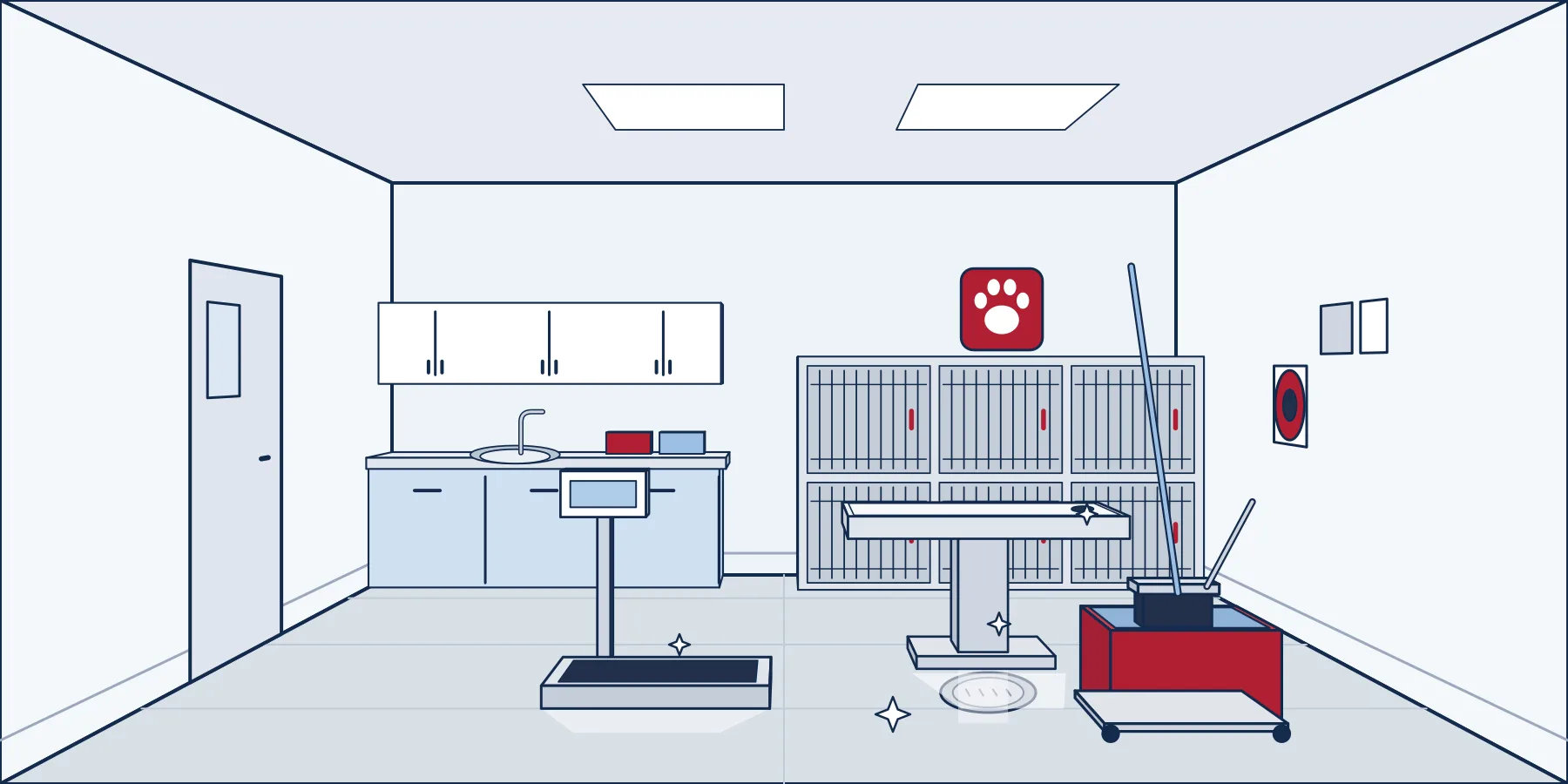
Counters, sinks, cabinet fronts, door handles and floors, cleaned and then disinfected with products that are safe around pets.
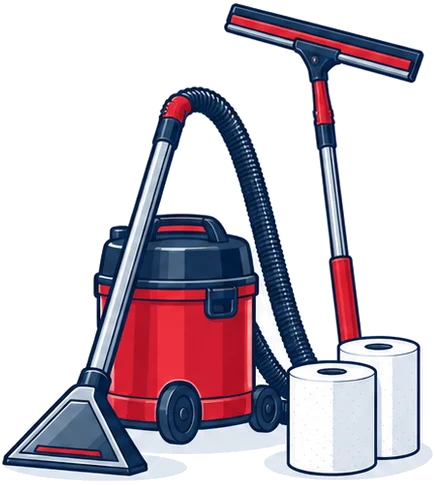
Kennel and Boarding Floors
Floors, walls and drains in kennel and boarding rooms, once your staff has moved the animals and removed animal waste.
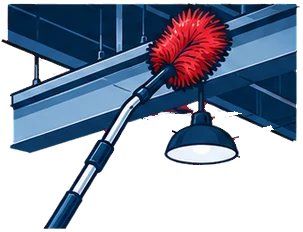
Vents, Returns and High Surfaces
Hair and dander collect overhead. High dusting reaches 40 feet without a lift, using a HEPA high-reach vacuum.
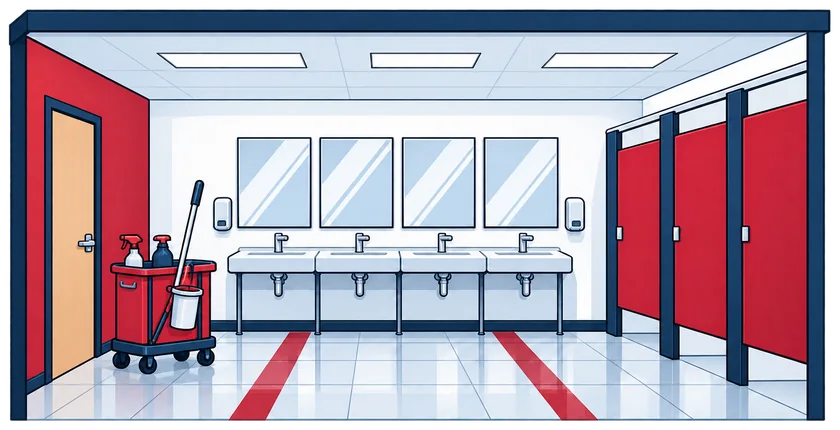
Restrooms
Client and staff restrooms disinfected and restocked. Their color-coded cloths stay in the restroom and never travel to an exam room.
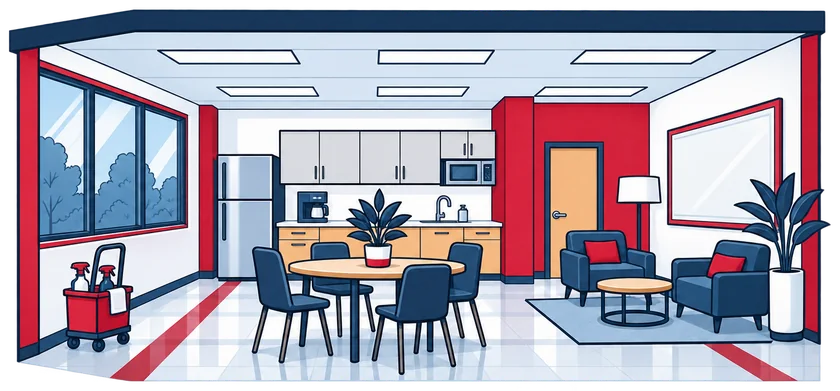
Staff Rooms and Offices
Break rooms, kitchens, offices and records areas, cleaned with tools kept separate from those used in clinical areas.
How Often: A Typical Plan
A clinic that sees patients every day usually needs cleaning every night it is open, with weekly and monthly tasks on top. The real plan is set at the walkthrough, around your hours, your boarding schedule and your protocol.
| Area | Nightly | Weekly | Monthly or Periodic |
|---|---|---|---|
| Lobby and reception | Floors, seating, counter, door glass, trash | Wall spots at pet height, baseboards | Hard floor scrub or refinish |
| Exam rooms | Counters, sinks, handles, floors | Cabinet fronts, chairs, light switches | Walls washed |
| Kennel and boarding rooms | Floors and drains after staff remove animals and waste | Walls and doors within reach | Deep floor scrub, grout and seams |
| Treatment areas | Floors and non-clinical surfaces in our scope | Cabinet fronts, door frames | Floor scrub |
| Vents and high surfaces | Not usually needed | Low vents and returns vacuumed | High dusting of vents, lights and ledges |
| Restrooms and staff rooms | Clean, disinfect, restock | Partitions and fixtures detailed | Floor drains and grout |
An example, not a package. Which rooms are in our scope, and when animals are moved, is agreed at the walkthrough.
Who Does What
Your staff handles the animals and everything that touches them. Our crew cleans the building, after your team has done its part in each room.
Our Crew Handles
- Kennel and boarding floors once animals are moved, and floors in every other room
- Walls, doors, handles, counters and sinks outside the clinical work
- Lobby, restrooms, staff rooms and offices
- Vents, returns and high surfaces
- Ordinary trash, and restocking paper and soap
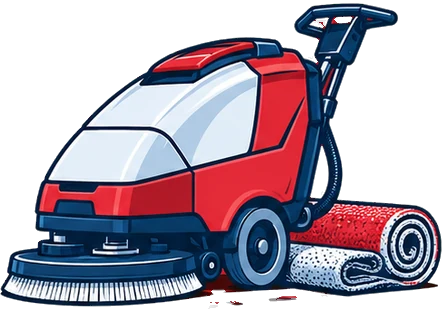
- Hard floor and carpet care on a schedule
Your Clinic Team Keeps
- Handling, moving and walking animals
- Cages, runs, bedding, bowls and animal waste, per your protocol
- Exam tables between patients
- The surgical suite, instruments and sterilization
- Sharps and medical waste
- Isolation rooms, under your infection-control plan
If your practice wants the crew to take on more, such as isolation room floors, the walkthrough sets the steps in writing first.
Standards and Safety
Clean first, then disinfect, and give the disinfectant time to work. That is the core of the public guidance below.
Contact Time, or Dwell Time
Every disinfectant has a contact time, also called dwell time: the minutes it needs on a surface before it has done its job. EPA guidance is to follow the label and leave the surface visibly wet until that time is up, so the label, not habit, sets the wait.
The Merck Veterinary Manual adds that surfaces must be fully dry before animals go back into their enclosures, which is why kennel floors are done on a schedule your staff can plan around.
Protecting Your Staff
Some animal illnesses can pass to people. The national compendium of veterinary standard precautions, published in the Journal of the American Veterinary Medical Association, aims to reduce disease among veterinary staff, and it treats the work environment and staff training as part of infection-control planning. Your practice sets that plan; our crew works to it.
Our Products and Tools
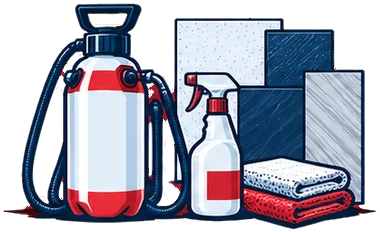
Our products disinfect while staying safe around pets, and all of them are EPA registered.
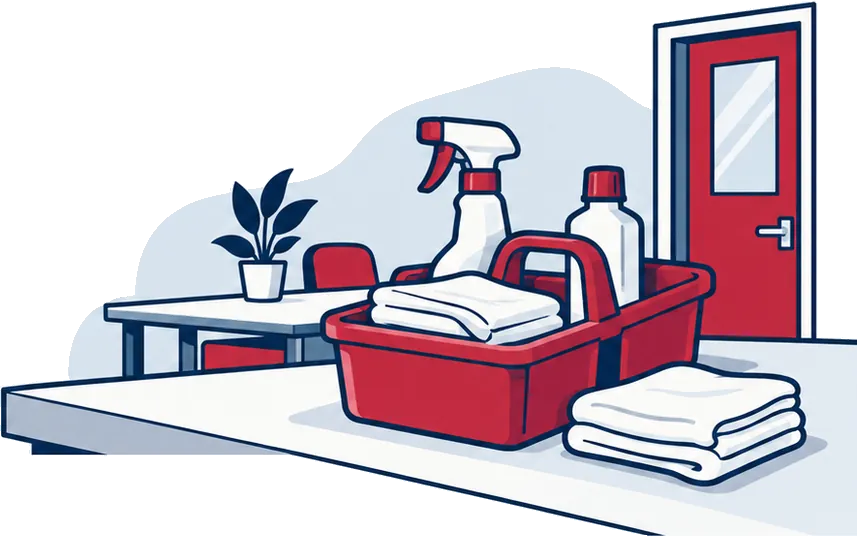
Color-coded cloths and tools keep restroom tools out of exam rooms, and mops are never dipped back into dirty water. Safety data sheets for our chemicals are kept in the janitor closet.
For deeper disinfection work, see our disinfection and sanitation cleaning.
How We Work: The Jani-Serv, Inc. Five-Step Plan
For a veterinary clinic, the walkthrough includes the kennel and boarding rooms and when animals are moved, so the crew's schedule fits your day.
- Free walkthrough. We visit your building, look at every room and ask how it is used before we quote.
- A written plan and quote. Tasks and frequency are set room by room around your hours and budget, on a flexible contract.
- A checked, trained crew. Background-checked, trained cleaners, with a dedicated account manager.
- Supervisor inspections. Regular quality checks and check-ins with you.
- Adjust as you go. Staff around the clock and sick-day coverage, plus one-time extras when you need them.
Why a Local Company for Your Clinic
A practice owner wants one company that answers the phone and knows the building. Jani-Serv, Inc. is a local, family-founded company, not a franchise, cleaning professional buildings since 2002.
Read moreShow less
- A dedicated account manager keeps your schedule and changes it when your hours or boarding season change.
- Nobody works in your clinic before clearing a thorough background check and E-Verify.
- HEPA backpack vacuums capture fine particles, which matters in a building full of hair and dander.
- Staff are on call around the clock, and a sick cleaner's shift is covered by someone else.
Where We Work
Our crews clean veterinary clinics and animal hospitals in Sandy, West Valley City, Roy and other Wasatch Front cities, and in Rexburg and Idaho Falls, Idaho. See all locations.
Read moreShow less
Vet clinics sit within our medical cleaning services. For human-health practices, see medical office cleaning and dental office cleaning.
Veterinary Clinic Cleaning FAQ
Straight answers from the Jani-Serv, Inc. team. Still curious? Ask us anything.
What disinfectant do veterinary clinics use?
Most clinics use an EPA-registered disinfectant whose label lists the germs they are concerned about, and the practice's infection control plan names it. Every cleaning product Jani-Serv, Inc. uses is EPA registered, and surfaces are cleaned first so the disinfectant can work.
Are your cleaning products safe for pets?
Yes. Our products are chosen to be safe around pets while still disinfecting, and each one is EPA registered.
How do you get rid of the smell in a vet clinic?
By cleaning it away rather than covering it up. Our crew cleans the soil out of floors, seams and drains before disinfecting, and high dusting clears hair and dander from vents and returns.
Do you clean kennels, cages and runs?
Your staff cleans cages, runs, bedding and bowls and removes animal waste, following your protocol. Once animals are moved, our crew cleans the kennel and boarding room floors, walls and drains.
How long does a disinfectant need to stay on a kennel floor?
As long as the product label says, which is its contact time. EPA guidance is to keep the floor visibly wet until that time is up, and the Merck Veterinary Manual adds that it should be fully dry before animals go back.
Can you clean while animals are boarding overnight?
Yes. We clean after closing, in the evening or early morning, and the plan sets which rooms the crew enters and when, around your boarding animals. Our staff is available around the clock.
What about pet hair in vents and on high surfaces?
Hair and dander collect in vents, returns and on light fixtures. We vacuum low vents on a schedule and high dust up to 40 feet without a lift, using a HEPA high-reach vacuum.
How often should a veterinary clinic be professionally cleaned?
Every night the clinic is open is typical, with weekly and monthly deep work on top. The right schedule depends on your hours, patient numbers and boarding, and is set at a free walkthrough.
Related Services and Facilities
Medical Cleaning
Our professional medical cleaning services follow a strict list of cleaning regulations for all medical cleaning services.
Explore Medical CleaningDental Office Cleaning
After-hours dental office cleaning in Salt Lake City and Utah: operatory floors, reception, kids corners, restrooms and labs, split with your dental team.
Explore Dental Office CleaningSanitation Cleaning
Top-rated disinfection cleaning services. Sanitation cleaning that is compliant with state laws, including EPA guidance & CDC guidance.
Explore Sanitation CleaningCommercial Floor Cleaning
With over two decades of commercial floor cleaning experience, we know how to do the job right. Offering the best office floor cleaning services in Utah County.
Explore Commercial Floor Cleaning
Get a Fast & Free Quote
Tell us about your space. We are locally owned and operated, not a franchise, so you can count on us.