Surgery Center and Terminal Cleaning in Salt Lake City and Utah
End-of-day terminal cleaning and daily care for ambulatory surgery centers, operating and procedure rooms, pre-op and PACU, done to your protocol along the Wasatch Front.
Turnover Cleaning and Terminal Cleaning: Who Does Which
A surgery center has two cleaning jobs: turning a room over between cases, and the terminal clean after the last case of the day.
Read moreShow less
Jani-Serv, Inc. does the terminal clean and the daily cleaning of the rest of the center, following the protocol your center sets.
Turnover cleaning happens between patients. CDC guidance on operating room cleaning lists it as the surfaces, equipment and floor inside the surgical field, anything soiled with blood or body fluids, and the high-touch spots outside the field, such as light switches and door handles. Your perioperative staff owns that work, along with the sterile field and every instrument, under your own policy.
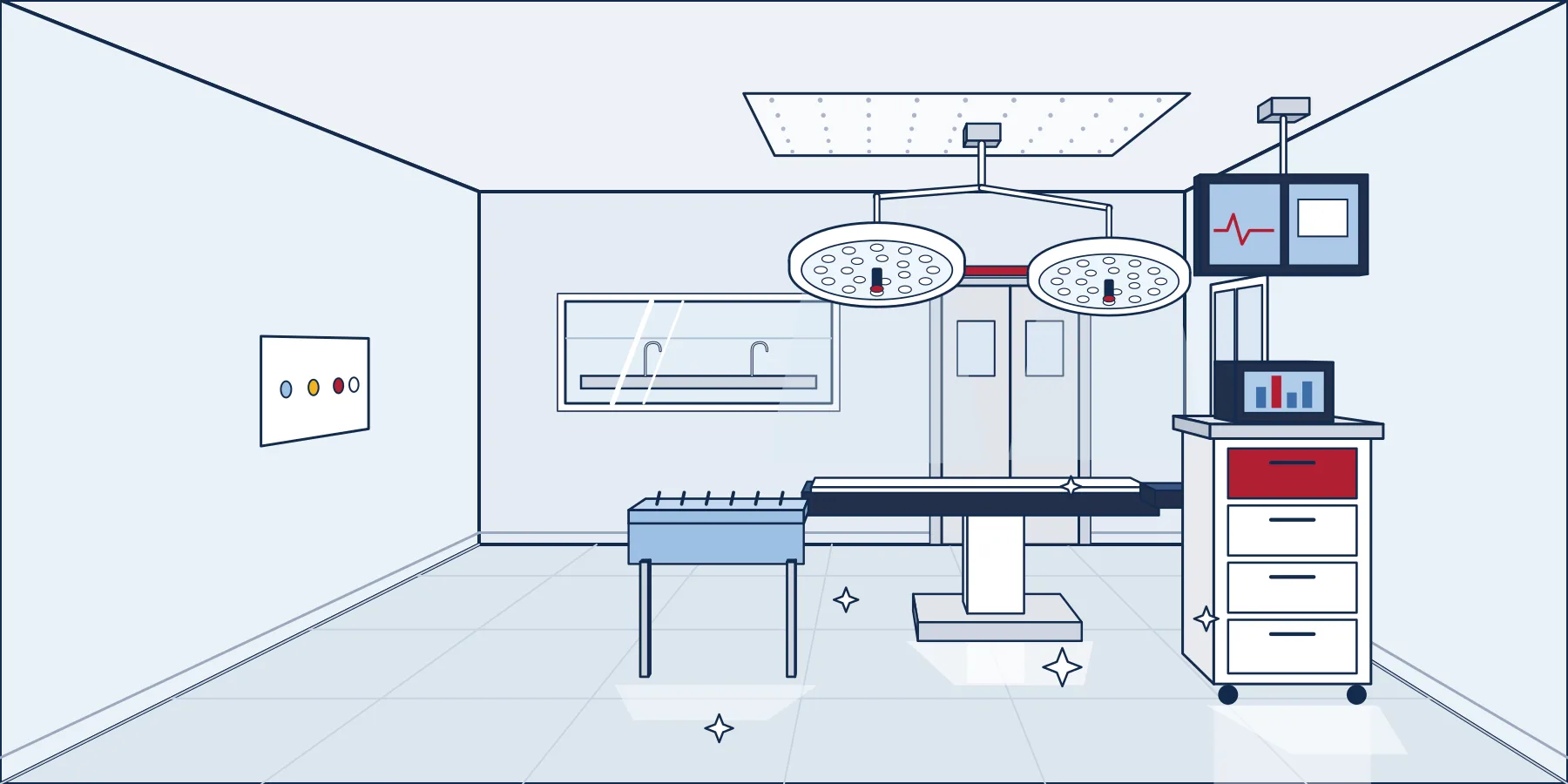
Terminal cleaning happens after the last procedure, when the room is empty. Every surface and every piece of non-critical equipment is cleaned and disinfected, the operating table and mobile equipment are moved, and the whole floor is done, including the scrub sinks and utility areas. That is the job our crew is there for.
We clean ambulatory surgery centers, outpatient and office-based surgery suites, procedure rooms, pre-op and PACU as part of our medical cleaning services.
What It Includes
A surgery center plan covers more than the operating rooms. These are the areas it usually takes in.
Operating and Procedure Rooms
Top to bottom after the last case: high surfaces first, then counters, cabinet fronts and walls within reach, then the full floor with the table moved.
Pre-Op and PACU Bays
Bed bays, rails within our scope, curtain tracks, counters, chairs and floors, cleaned and disinfected bay by bay.
Scrub and Utility Areas
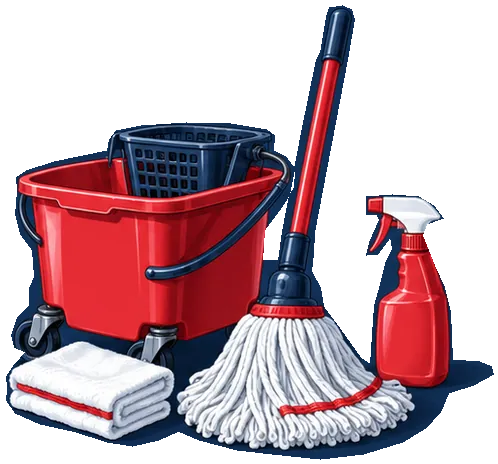
Scrub sinks, splash walls, soiled and clean utility rooms and janitor closets, with tools kept apart for each area.
Floors and Corridors
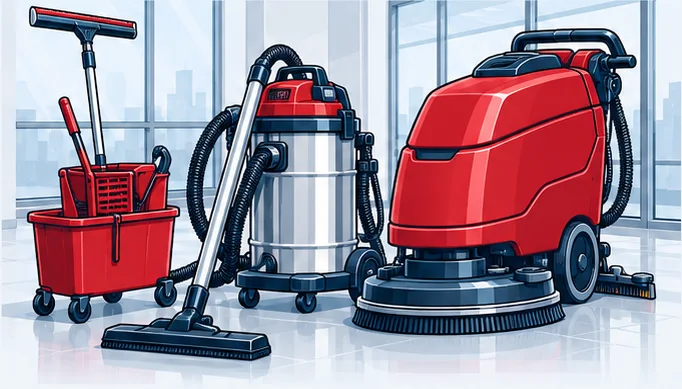
Flat mops that never go back into dirty water, HEPA backpack vacuums, and scheduled scrubbing or refinishing of hard floors.

Waiting Room, Offices and Restrooms
The public side of the center: seating, front desk, restrooms, staff lounge and offices, cleaned daily and restocked.
Log Book and Safety Data Sheets
Our crew checks the communication log book on arrival, and a safety data sheet for every chemical stays in the janitor closet.
How Often: A Typical Plan
A typical surgery center plan has a terminal clean on every day the rooms are used, with weekly and monthly work on top. The real plan is written at your walkthrough, around your case schedule and your infection control plan.
| Area | After the Last Case | Weekly | Monthly or Periodic |
|---|---|---|---|
| Operating and procedure rooms | Terminal clean, high to low, entire floor with the table moved | Low-touch surfaces such as cabinet interiors and door tops | Air vents and returns, high surfaces |
| Pre-op and PACU | Bays, counters, chairs, sinks and floors | Curtain tracks, wall guards, baseboards | Hard floor scrub |
| Scrub and utility rooms | Scrub sinks, splash walls, floors, trash | Shelving and cabinet fronts | Floor drains and corners |
| Corridors and stairs | Floors, handrails, door handles and push plates | Doors and frames, wall spots | Strip and refinish hard floors |
| Waiting room, offices, restrooms | Restrooms, front desk, seating, trash, restocking | Dusting of ledges and frames | Blinds, high and low dusting |
Typical only. Your plan is set at the walkthrough: rooms not used on a given day, and anything your protocol assigns to clinical staff, are written in or out there.
Who Does What
Your clinical team keeps everything that touches the patient or the sterile field. Our crew cleans the room around it, after the last case, to the steps your center sets.
Our Crew, After the Last Case
- The terminal clean of operating and procedure rooms after the last case
- Non-critical surfaces and equipment your protocol assigns to us
- Floors throughout, with the operating table and carts moved
- Scrub sinks, utility rooms and janitor closets
- Pre-op, PACU, corridors, waiting room, offices and restrooms
- Trash removal and restocking, as set in the plan
Your Perioperative Team Keeps
- Turnover cleaning between cases, under your policy
- The sterile field, instruments and sterile processing
- Sharps containers and regulated medical waste, with your waste hauler
- Patient equipment your protocol keeps with clinical staff
- Your infection control program and its records
- Sign-off that a room is ready for the first case
Where a task sits on the line, such as wiping anesthesia carts, the walkthrough settles it in writing.
For disinfection beyond the nightly plan, see our disinfection and sanitation cleaning; for corridor and lobby floors, see commercial floor care.
Standards and Safety
A few public rules and guidelines shape surgery center cleaning. Your center decides how they apply; our crew works to the protocol that results.
Order of Work: Top to Bottom, Clean to Dirty
CDC environmental cleaning procedures (written for health facilities with limited resources worldwide) say to work from cleaner areas to dirtier ones, from high to low with floors last, and in a set pattern so nothing is missed.
Terminal cleaning, they add, needs cleaning, infection prevention and clinical staff working together, with each surface clearly assigned and a checklist to work from. The operating room guidance also has staff check the record of the previous evening's terminal clean before the first case, and do one if that record is missing.
AORN
AORN, the Association of periOperative Registered Nurses, publishes guidance on cleaning the operating room, and its environmental cleaning guideline is being updated as the Guideline for Environmental Hygiene. Its public article on between-case steps says to clean from least soiled to most soiled, start high, and keep disinfectant wet for its full contact time, and calls this everyone's responsibility, nurses and environmental services alike.
The guideline is written for your clinical team; Jani-Serv, Inc. claims no certification against it.
Contact Time
The EPA defines contact time as how long a disinfectant must stay on a surface to work, and says the surface should stay visibly wet for that whole time.
We use EPA-registered, hospital-grade disinfectants, and we clean before we disinfect, because soil left on a surface gets in the way.
OSHA and Medicare Rules
Under the OSHA Bloodborne Pathogens Standard, an employer must keep the worksite clean and sanitary and set a written schedule and method for cleaning and decontamination.
Medicare's conditions for ambulatory surgical centers require an infection control program that keeps a sanitary environment and documents which nationally recognized guidelines the center uses. Those duties sit with your center. Our part is to adhere to health cleaning standards, including guidelines from the CDC, and to follow the guidelines your facility sets.
How We Work: The Jani-Serv, Inc. Five-Step Plan
For a surgery center, we walk the rooms with whoever owns your infection control plan, so the crew's steps match it from the first night.
- Free walkthrough. We visit your building, look at every room and ask how it is used before we quote.
- A written plan and quote. Tasks and frequency are set room by room around your hours and budget, on a flexible contract.
- A checked, trained crew. Background-checked, trained cleaners, with a dedicated account manager.
- Supervisor inspections. Regular quality checks and check-ins with you.
- Adjust as you go. Staff around the clock and sick-day coverage, plus one-time extras when you need them.
Why a Local Company for a Surgery Center
When a protocol matters, it helps to know who is in the room each night. Jani-Serv, Inc. has been cleaning professional buildings since 2002, and it is still locally owned and operated rather than a franchise.
Read moreShow less
- Our capabilities statement lists more than 50 clinical facilities among past clients.
- Each person on the crew has cleared a thorough background check and E-Verify, and the team receives ongoing training in infection control, safety protocols and industry-specific techniques.
- The company holds its license, bond and insurance in Utah.
- Sick-day coverage, so a terminal clean is not skipped because one cleaner is out.
- If a room misses the mark, we return and clean it again at no additional cost.
Where We Work
Surgery centers and procedure suites from Ogden and Salt Lake City south to Provo are in our area, as are Rexburg and Idaho Falls in Idaho.
Read moreShow less
See all locations. For the offices and clinics around your center, see medical office cleaning.
Surgery Center and Terminal Cleaning FAQ
Straight answers from the Jani-Serv, Inc. team. Still curious? Ask us anything.
Who cleans operating rooms after surgery?
Between cases, the surgery center's own team turns the room over under its infection control policy. The end-of-day terminal clean can be done by the center's staff or by a contracted cleaning crew like ours, working to the center's written protocol.
What is terminal cleaning in a surgery center?
Terminal cleaning is the full clean and disinfection of an operating or procedure room after its last case of the day. It covers every surface and non-critical piece of equipment, the scrub and utility areas, and the entire floor with the operating table and carts moved out of the way.
How is terminal cleaning different from cleaning between cases?
Between-case cleaning is a quick turnover of the surgical field and high-touch spots between patients, done by your clinical team under your policy. Terminal cleaning is the slower, top-to-bottom clean of the whole room once the day is over, which is the job our crew does.
How often should an operating room get a terminal clean?
After the last procedure on each day the room is used, according to CDC guidance on operating room cleaning. Your own protocol sets what happens to rooms that were not used, and that schedule goes into our written plan.
Does your crew clean surgical instruments or handle sharps?
No. Instruments, the sterile field and sterile processing stay with your clinical team, and sharps containers and regulated medical waste stay with your team and your waste hauler. Our crew cleans the room around them, and the exact line is written down at the walkthrough.
Will your crew use the disinfectant our infection control plan specifies?
Yes. Where your plan names a product or method, we follow the guidelines your facility sets. Otherwise we use EPA-registered, hospital-grade disinfectants, and we always clean before we disinfect so the product can work.
Do you keep records our center can show a surveyor?
Our crews check the communication log book on arrival and keep a safety data sheet for every chemical in the janitor closet. How each terminal clean is signed off is agreed at the walkthrough so it fits the records your infection control program already keeps.
What happens when the last case runs late?
The crew's start time can move with your case schedule. Our staff is available around the clock, and your account manager keeps the schedule and updates it when your cases run late or your hours change.
Related Services and Facilities
Medical Cleaning
Our professional medical cleaning services follow a strict list of cleaning regulations for all medical cleaning services.
Explore Medical CleaningMedical Office Cleaning
Room-by-room cleaning for clinics and doctor offices in Salt Lake City and Utah: exam rooms, lobbies, restrooms and labs, after hours or by day. Since 2002.
Explore Medical Office CleaningSanitation Cleaning
Top-rated disinfection cleaning services. Sanitation cleaning that is compliant with state laws, including EPA guidance & CDC guidance.
Explore Sanitation CleaningFloor Stripping and Waxing
Commercial floor stripping and waxing for Utah schools, clinics and shops: old finish removed, new coats laid, work done after hours. Free walkthrough.
Explore Floor Stripping and Waxing
Get a Fast & Free Quote
Tell us about your space. We are locally owned and operated, not a franchise, so you can count on us.