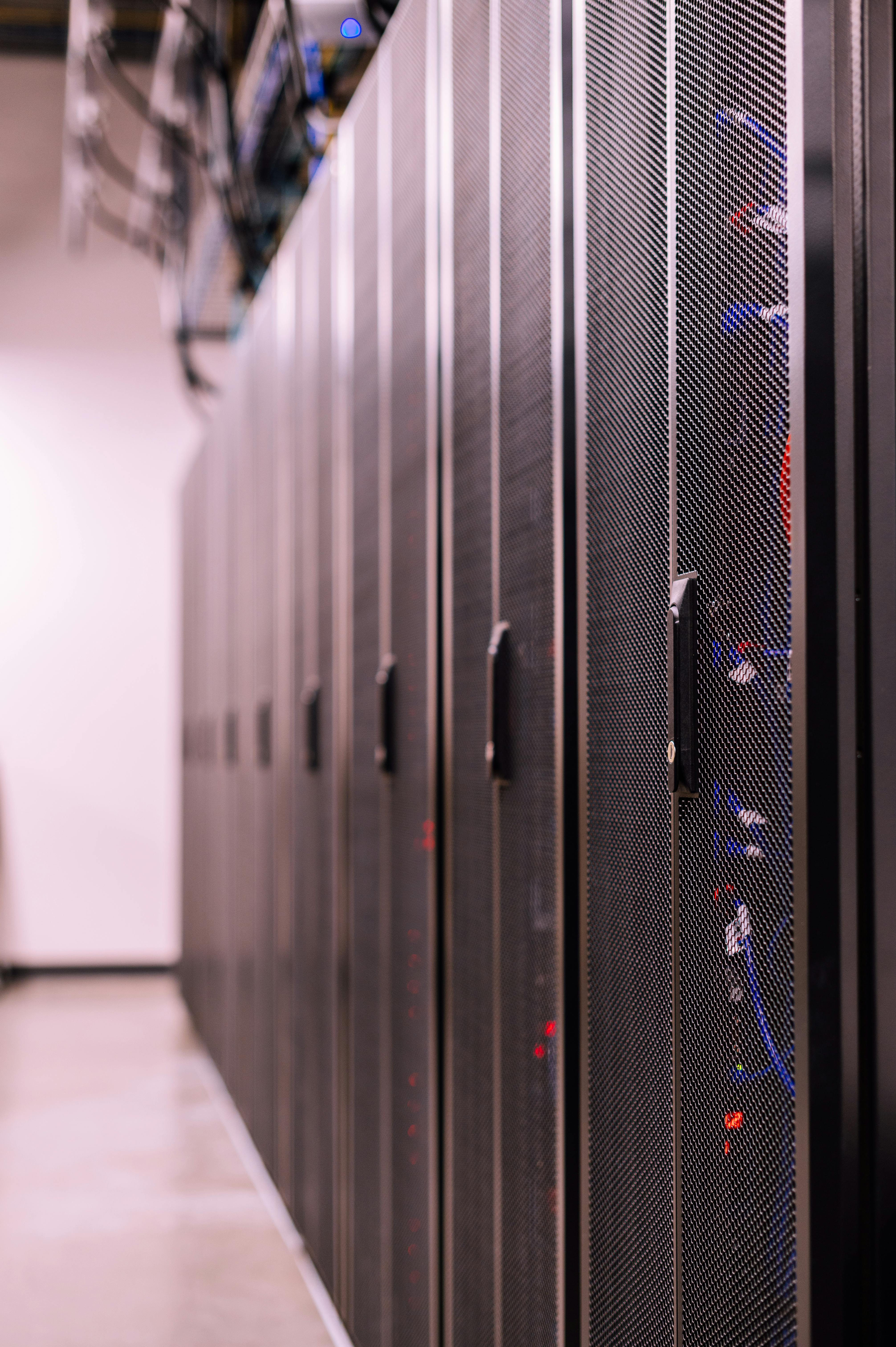
The Hidden Risks of Standard Janitorial Services in Mission-Critical Environments. Why Data Center Cleaning is so important. Data Center Cleaning is essential for maintaining optimal performance.
The Danger of Particulate Matter and ISO 14644-1 Standards
Modern servers run at high RPMs to keep hardware cool. When particulate matter such as construction dust or silica enters the airflow it can act like sandpaper on a microscopic level that can cause wear on the fans and cause issues with the servers. It is important for cleaners to use ESD-safe equipment to avoid blasting small particles into the server room and possibly destroying the hardware that is processing important data. Server rooms need 100% uptime in order to be a cost effective service and Janitorial staff has to be aware of any problems that can be created by using the wrong cleaning supplies.
Effective Data Center Cleaning minimizes downtime and protects sensitive equipment from particulate matter.
Why Your HEPA Vacuum Isn’t Enough: The Role of ESD-Safe Equipment
The largest factor when cleaning server equipment isn’t just dust, there is a danger of electrostatic discharge. Dust particles move quickly through a vacuum hose which can create a static charge that sits in the vacuum until it touches something that is grounded such as a server rack. These electrostatic charges can create issues even weeks after a cleaning is performed.
Data Center Cleaning strategies must include regular assessments to ensure compliance with industry standards.
We use ESD-Safe (Antistatic) Vacuums. These machines are made of conductive or dissipative materials and are fully grounded from the nozzle to the power plug, ensuring static is drained away safely before it can jump to your hardware.
Zinc Whiskers and Static: The Silent Killers of Server Hardware
Zinc whiskers are microscopic hair-like crystals that form around steel surfaces that are electroplated with zinc. They are a threat to the data center industry because they are highly electrically conductive. These whiskers are only 2 microns in diameter which is 97% smaller than human hair (50-100 microns). These small metal needles can break off of the wires and get sucked into server intakes which can cause short circuiting, which destroys the zinc whiskers and ruin servers, making it hard to identify the cause of the short circuiting. Nasa has even faced issues with zinc whiskers ruining billions of dollars in equipment.
You cannot just wipe away these whiskers, improper cleaning is the #1 cause of zinc whisker outbreaks. Installing HEPA filters into the server room can remedy the situation, but the best solution is to use hot-dip galvanized zinc, which helps to remove the issue altogether.
Implementing a robust Data Center Cleaning regimen prevents hazardous situations.
Developing a Data Center Cleaning Maintenance Schedule that Meets ASHRAE Guidelines
ASHRAE states that TC 9.9 was formed to address concerns of Mission Critical Facilities, technology spaces and electronic equipment, designs, operations, maintenance, and efficient energy usage of modern data centers and technology spaces and it is considered the authority on Data Center Environments, they provide guidelines on building and maintaining compliant environments for server rooms. Following the ISO 14644-1 standard for cleanliness in a data centers.
A well-planned Data Center Cleaning schedule is vital for operational success.
Daily vs. Quarterly Tasks: Keeping Your Facility “White Glove” Ready
Regular Data Center Cleaning ensures that your facility remains compliant with safety regulations.
| Frequency | Action Item | Target Area | Tooling |
| Daily Data Center Cleaning should be prioritized to maintain a pristine environment. | Entrance Cleaning Incorporating Data Center Cleaning practices will ultimately enhance efficiency and reliability. | Air-locks / Hallways | Micro-fiber / Tacky Mats |
| Monthly Regular Data Center Cleaning is critical to preventing dust accumulation that can impact server performance. | Cabinet Surface Clean | Server Racks | Antistatic wipes |
| Quarterly A comprehensive Data Center Cleaning strategy involves multiple layers of protection against contaminants. | Floor Decontamination | Raised Floor Surface | Dissipative Cleaners |
| Bi-Annually | Subfloor Vacuuming | Under-floor Plenum | ESD-Safe HEPA Vacuums |
Effective Data Center Cleaning methods ensure minimal disruption to operations.
Focus on preventing “external” contaminants from entering the “white space” (the server room).
Data Center Cleaning practices protect valuable infrastructure from damage.
- Tacky Mat Maintenance: Replace adhesive mats at every entrance to ensure they continue to pull silica and dirt from shoes.
- Trash Removal: Empty non-essential waste bins. ASHRAE recommends that no cardboard or packing materials stay in the white space, as they shed massive amounts of particulate.
- Visual Inspection: Check for any “settled dust” on cabinets or flat surfaces, which can indicate a failure in the CRAC (Computer Room Air Conditioner) filtration system.
2. Quarterly: The “Deep Clean” (ASHRAE Recommended Interval)
ASHRAE technical bulletins emphasize that quarterly deep cleans are the standard for high-availability facilities to keep particulate counts within ISO Class 8 limits.
- Floor Surface Decontamination: Use specialized dissipative (antistatic) chemicals and specialized scrubbers that do not “buff” the floor (buffing creates airborne dust).
- Equipment Rack Wipedown: Use lint-free, antistatic cloths to wipe down the exterior of server racks and blanking panels.
- Subfloor Inspection: Check the plenum (the space under the raised floor) for any debris that could be sucked into the airflow.
3. Semi-Annual to Annual: Infrastructure Remediation
This involves “critical-zone” cleaning that requires high-level technical oversight.
- Subfloor Vacuuming: Using ESD-safe HEPA vacuums to clean the concrete subfloor. This is critical because the subfloor acts as the “lungs” of the data center, pushing air up through the tiles.
- Ceiling Plenum & Cable Tray Cleaning: Remove dust from overhead “basket” trays to prevent it from falling into server intakes during cable pulls.
- Zinc Whisker Audit: Inspect pedestals and floor tile undersides for crystalline growth.
Technical Requirements & Safety Standards
- Equipment: All vacuums used on-site must be UL-listed HEPA filtered (99.97% efficiency at 0.3 microns) and equipped with ESD-safe grounded hoses and nozzles.
- Compliance: Services are performed to meet or exceed ISO 14644-1 Class 8 particulate limits.
- Personnel: All Jani-Serv, Inc. technicians are trained in ESD-awareness, “Critical Environment” protocols, and emergency EPO (Emergency Power Off) avoidance.
- Documentation: Upon completion, Jani-Serv, Inc. will provide a Post-Service Report documenting the areas cleaned and any environmental risks (e.g., cable damming, zinc whiskers) identified during the process.
Subfloor Decontamination: Eliminating Dust Where It Starts
Unlike standard cleaning, subfloor decontamination is a high-precision technical service. At Jani-Serv, Inc., the process typically involves:
- Zonal Tile Lifting: Technicians lift floor tiles in a specific grid pattern to maintain airflow pressure and structural integrity.
- HEPA Vacuuming: Using ESD-safe, HEPA-filtered vacuums to remove “heavy” debris (leftover construction materials, metal shavings) and microscopic dust.
- Component Wiping: Hand-cleaning the pedestals (the “legs”) and stringers that support the floor, as these often harbor “zinc whiskers” or settled dust.
- Sealing (Optional but Recommended): In some cases, applying a specialized concrete sealer to the structural slab to prevent “concrete dusting”—where the concrete itself breaks down into fine alkaline powder.
Why It Is Necessary (The “Airborne Threat”)
If the subfloor is neglected, it becomes a reservoir for contaminants that lead to:
- Particulate Bypass: Dust bypasses the primary CRAC filters and settles on server motherboards, leading to overheating.
- Zinc Whisker Growth: As discussed, galvanized pedestals in the subfloor can grow metallic filaments that cause electrical shorts.
- Airflow Obstruction: Large debris (cable scraps, old pull-strings) can disrupt the laminar flow of air, creating “hot spots” in the server room.
Post-Construction Cleaning: Transitioning from Build-Out to Live Operations
Strategically planned Data Center Cleaning enhances the longevity of your equipment.
There are many risks associated with construction when starting up a server room and the area must be perfectly clean before anything actually begins. It is important to have a solid cleaning plan in place before any hardware is placed to avoid causing issues to the server room itself.
You cannot achieve “Five Nines” (99.999%) uptime if you launch from a “One Nine” (dirty) environment. Post-construction cleaning by Jani-Serv, Inc. isn’t just a final walk-through; it is the final engineering control that ensures your hardware starts and stays within its design specifications.
Understanding the importance of Data Center Cleaning is crucial for operational success.
| Construction Risk | Impact on Uptime | Cleaning Mitigation |
| Concrete Dust | High Alkalinity causes circuit corrosion. Implementing strict Data Center Cleaning protocols reduces risks significantly. | Subfloor Sealing & HEPA Vacuuming. |
| Metal Shavings | Causes “Instant-Shorts” on motherboards. | Magnetic-aided floor sweeping & ESD-Safe Vacs. |
| Drywall Particulates | Insulates heat sinks, causing overheating. | ISO Class 8 Air Scrubbing. |
| Residual Adhesive | Traps dust near air intakes, clogging filters. | Dissipative Solvent Cleaning. |
What to Look for in a Data Center Cleaning Partner (RFP Checklist)
Partnering with experienced professionals for Data Center Cleaning ensures optimal results.
When hiring a data center cleaning partner, a standard janitorial contract is a liability, not an asset. To ensure 100% uptime and ISO compliance, use this technical RFP checklist to vet your next service provider.
1. Technical Compliance and Certifications
Don’t just ask if they are “cleaners”; ask if they are Critical Environment Technicians.
The importance of Data Center Cleaning cannot be overstated for maintaining high standards.
- ISO 14644-1 Expertise: Can the vendor provide a certificate of conformance for ISO Class 8 air cleanliness?
- ASHRAE TC 9.9 Knowledge: Does the team understand the thermal and particulate guidelines for “live” server environments?
- ESD-Awareness Training: Are technicians certified in Electrostatic Discharge (ESD) prevention (ANSI/ESD S20.20)?
- OSHA Safety Compliance: Does the company maintain a rigorous safety program for working around high-voltage equipment?
2. Specialized Equipment & Chemicals
The wrong vacuum can cause a catastrophic “lightning bolt” discharge. Ensure the vendor uses the right tools:
Data Center Cleaning requires a specialized approach to achieve the desired cleanliness.
- ESD-Safe HEPA Vacuums: Are the vacuums UL-listed, fully grounded from nozzle to plug, and HEPA-filtered to 0.3 microns?
- Dissipative Cleaning Agents: Does the vendor use specialized chemicals that maintain the Electrical Resistance (Ω) of your data center flooring?
- Non-Linting Consumables: Do they use Class 100 cleanroom-grade, lint-free microfiber to prevent airborne fiber shedding?
3. Personnel Security and Insurance
In a mission-critical facility, who enters your room is as important as how they clean it.
- Background Checks & Drug Testing: Does the vendor perform federal-level background checks on all staff?
- Security Clearance Experience: Is the staff trained in two-factor authentication entry, “Man-Trap” protocols, and EPO (Emergency Power Off) awareness?
- Professional Liability (E&O) Insurance: Does their policy specifically cover “Professional Services” within data centers (not just general office cleaning)?
- Business Interruption Coverage: Are they insured against accidental downtime caused by cleaning activities?
Incorporating Data Center Cleaning into your strategy ensures reliable operations.
4. Scope of Specialized Services
A true data center partner handles more than just the floor. Ensure their SOW includes:
The role of Data Center Cleaning is vital for mitigating risks associated with equipment failure.
- Subfloor Decontamination: Deep-cleaning of the concrete plenum and support structures.
- Zinc Whisker Remediation: Identifying and safely removing metallic filaments from galvanized steel.
- Ceiling & Cable Tray Cleaning: Removing “gravity-drop” dust from overhead ladder racks.
- Post-Construction Micro-Cleaning: Transitioning a site from a build-out phase to a “live” commissioning state.
5. Reporting and Accountability
If it isn’t documented, it didn’t happen.
Maintaining a rigorous Data Center Cleaning process is essential for compliance and safety.
- Post-Service Reports: Do they provide a detailed audit of what was cleaned and any environmental risks discovered?
- Particle Count Testing: Can they provide real-time air quality testing before and after the service?
- Client References: Can they provide testimonials from other Mission-Critical or Colocation facilities?
Insurance and Liability: Protecting Your High-Value Infrastructure
Standard General Liability covers physical damage (like breaking a window). It does not usually cover “intangible” losses.
- The Need: If a cleaning error causes a server to overheat or a network to go down, the client loses revenue, data, and reputation.
- What to ask for: A Tech E&O policy that specifically includes Network Security and Privacy Liability. This covers the “Business Interruption” costs associated with downtime caused by the vendor.
Why Jani-Serv, Inc. is the best solution for Data Center Cleaning
Data Center Cleaning is a fundamental aspect of operational excellence in technology facilities.
In the mission-critical world of data center cleaning, “clean” is a technical specification, not a visual preference. At Jani-Serv, Inc., we move beyond the capabilities of standard commercial janitorial services to provide high-precision environmental decontamination that protects your hardware, your uptime, and your bottom line.
Proven Expertise in the Utah Silicon Slopes We don’t just understand the theory of data center maintenance; we execute it daily. Jani-Serv, Inc. currently manages the specialized cleaning for a high-availability data center right here in Utah. This local, hands-on experience means we are intimately familiar with the unique challenges of the Intermountain West’s climate—from managing low-humidity static risks to mitigating the fine-particle dust characteristic of our region.
The Jani-Serv, Inc. Technical Advantage:
- ISO 14644-1 Compliance: Our protocols are engineered to maintain Class 8 air cleanliness standards, ensuring your facility passes environmental audits with flying colors.
- ESD-Safe Operations: We utilize exclusively ANSI/ESD S20.20 compliant, grounded HEPA vacuums and dissipative chemistry to eliminate the risk of electrostatic discharge.
- Uptime-Centric Culture: Our technicians are trained in “Critical Environment” protocols, focusing on the strict avoidance of EPO triggers and the preservation of laminar airflow in the subfloor plenum.
- Comprehensive Insurance: We carry the high-limit liability and specialized professional coverage required to operate in multi-million dollar infrastructure environments, giving you total peace of mind.
From subfloor decontamination to post-construction micro-cleaning, Jani-Serv, Inc. is the partner Utah’s tech leaders trust to keep their “white space” pristine and their servers running at peak efficiency.
Ready to stabilize your environment? Visitjaniservinc.com to request a technical site audit and see how our Utah-based team can fortify your facility’s uptime.
Ensure your success with proven Data Center Cleaning solutions by contacting us today.